
Living Wild
- Dec 4, 2025
- 2 min read
December 4, 2025
Happy Thursday!
The mild fall finally came to an end and snow fell in Colorado, bringing that magical feeling of a first snow. Today is a cozy day to fletch some arrows by the fire and enjoy a full moon.

I had headed out to the ranch to break ice ahead of the snow. While on foot, scouting for the herd, I discovered that the girls had long since spotted me. Drawn uphill by the unfamiliar sound of an axe hitting ice, they knew someone was there long before I saw fuzzy brown coats peeking through the whispering pines. Intrigued at finding the herd in the trees, I watched them quietly meander through the shadows and mist as an ethereal fellowship.
Curiously, yet skittishly, (as is their natural way) they approached using poor eyesight to gauge if I were a threat. I called to them. I am no wolf as they had suspected. They dropped their guard and circled me. It was a friendly ambush, them looking curiously through the dry winter grass to see if I had a bucket of cubes for a green treat.
As buffalo ranchers, we let the buffalo be buffalo as much as possible. We give them room to roam, leave their wallows dusty, and do our best to abstain from selective breeding and domestication. But, it's not a perfect system. For one thing, it's easier to move and handle the herd if they are treat-trained. Another, North America is different than it was 300 years ago. There are a lot more fences nowadays.

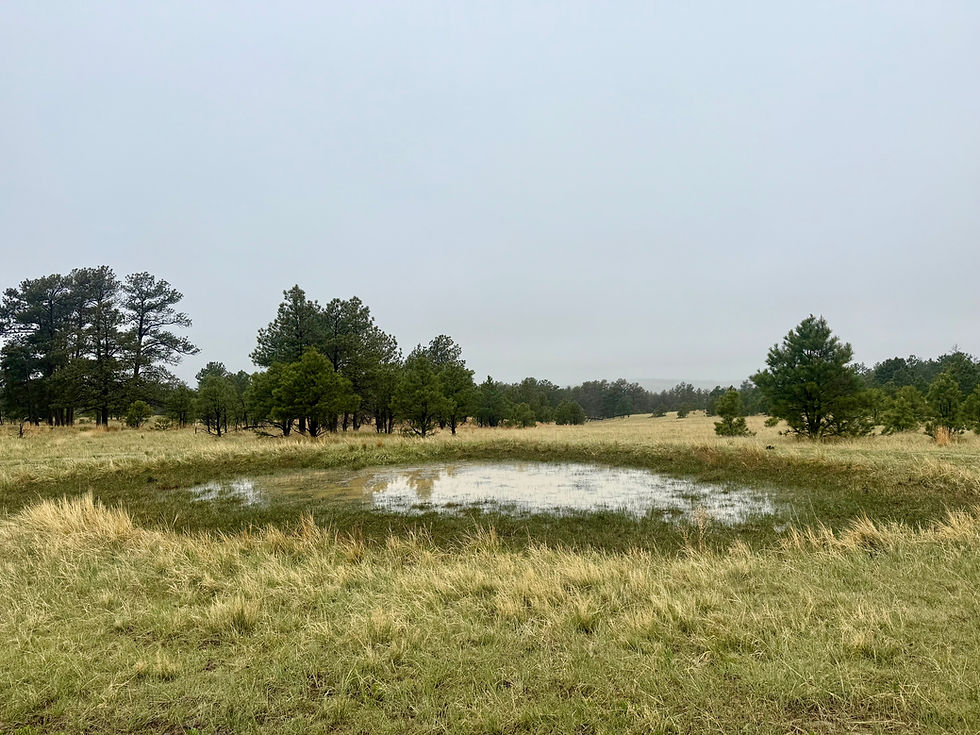
Our breeding herd is located along one of the last tree stands to the east. The land is wide-open, short grass prairie with a ridge of pines running through the middle. Due to the barrier of a fence, the buffalo are forced to navigate the ridge to move between the patches of prairie. The way the herd trepidly treads through the forest and rarely grazes the bluestem and grama between the pines, makes it obvious these Plains Bison prefer the open. In the summer heat, the buffalo will stay in the sun and seek no shelter in the cool forest. They will first find water elsewhere - whether livestock tank, natural springs, or puddles - before venturing to the pond deep in the trees. Perhaps it is an instinct to avoid predators. (A similar behavior in how they will not linger around a water source like domesticated cattle tend to do.)
Or perhaps it is not so much a fear driven instinct, but something deeper that calls to them. A voice of undomesticated generations at work still within them. The plains of North America is home. Either way, may we all find a place that calls to us in the vastness of the wild and be aware enough to realize when it feels like home.




It's fascinating to learn about the buffalos' instinctive behaviors and think about how they differ from our own. I love the videos and pictures!