
Buffalo and Bowstrings
Updated: Dec 12, 2025
December 1, 2025

All true adventures begin by throwing away the travel arrow to life. The familiar rules no longer apply, because it's a different game. The outcome is uncertain and the excitement is in the hardship and happiness of cutting a new path. Once lost, life is in seeing where you land. For us, that was starting Lost Arrow Buffalo Co. from our vision to get buffalo back on the land and produce meat as closely to how nature intended it as possible.
As the ranch name also implies, I enjoy archery and, yes, I've lost my share of arrows. There's something simple and ancient about a bow and arrow, just like the huge beasts that graze on the prairie, and have been for 250,000 years. The oldest buffalo hunts were accomplished by a penetrating lance or arrow to the lung cavity. All of us have ancestors who yielded a bow. The buffalo are meant to be on the land, a bow is meant to be in a hand.
Which brings me to bowstrings... and for today, yucca. Yucca is not looked at kindly by ranchers, or any landowner. Although yucca is a native plant, it can indicate over-grazed pastures, it's sharp, pokey leaves dotting ridges that may have once been inhabited by lush prairie grass. A dense, thick taproot makes removal of the plant difficult. Most livestock won't touch it. The beautiful exception is buffalo. Buffalo will eat yucca, especially in the winter months along with most native grasses and forbs. The truth is, yucca would be viewed differently if we were cast out into the wilderness. It has its uses. One being to make a quick bowstring - if there's no buffalo sinew available, of course.
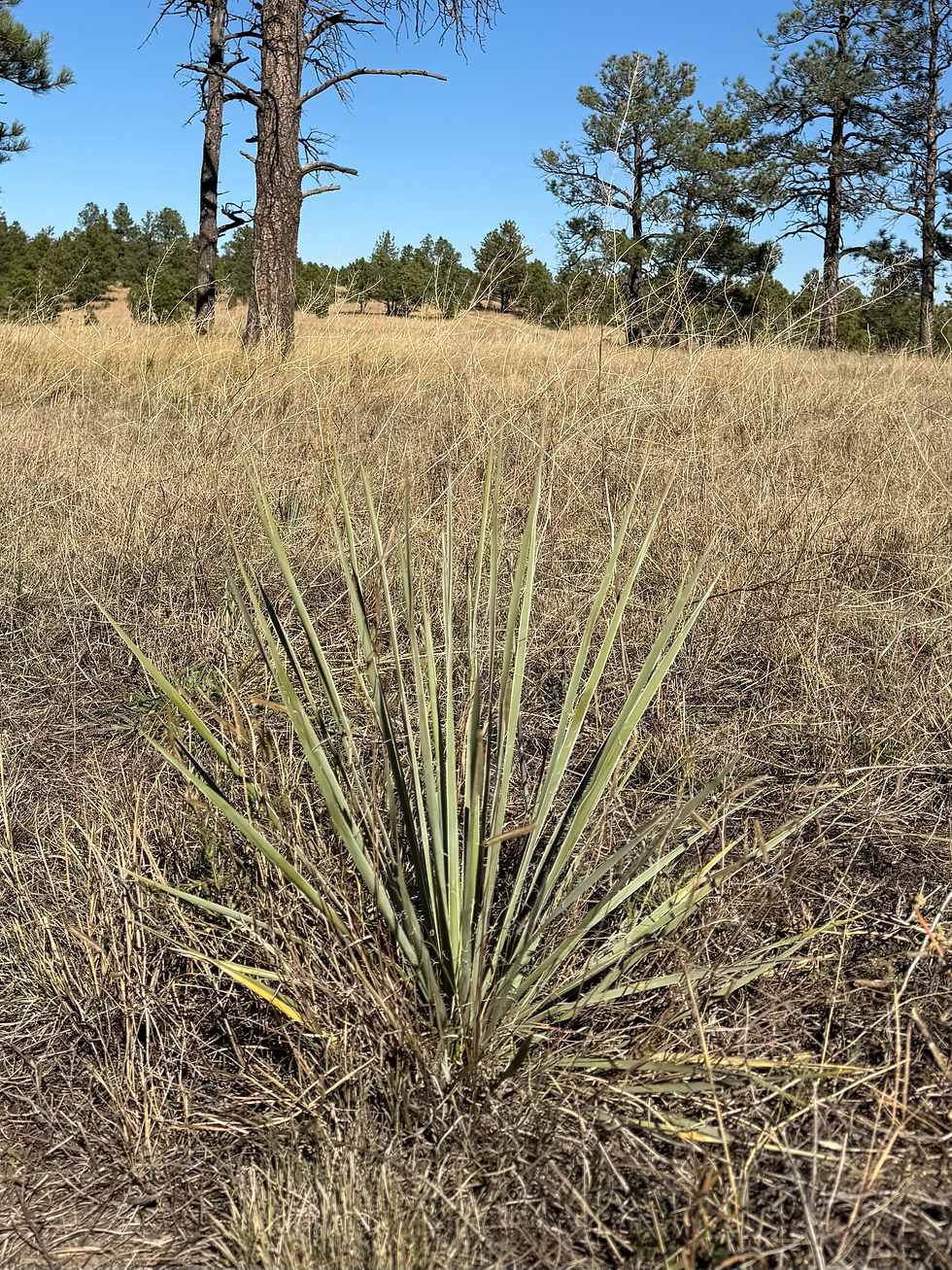
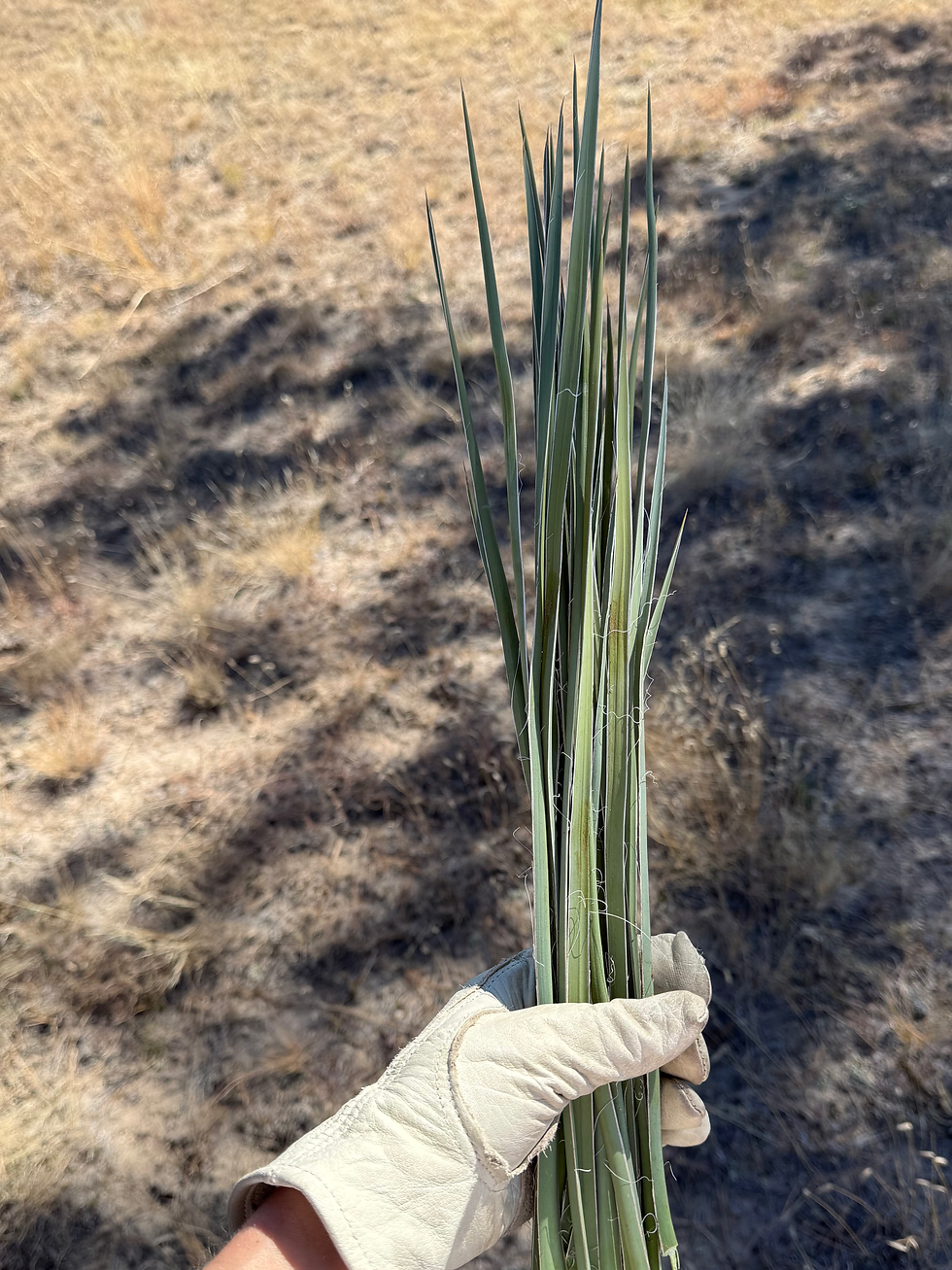
Cut 15-25 leaves. This string was composed while the leaves were green. Another option is retting, decaying the fleshy part and leaving behind the fibers, done by placing stems in water for 1-2 weeks. The leaves are scraped with a dull blade, spoon, or rock.

Tear leaves into small strips about 1/8 inch. These strips are then used to do a flemish twist to make a bowstring. The method is shown here. The messier the fiber bundle that is grabbed to add into the string, the better. Fibers that have thick ends some up and some down, not perfectly aligned strands, and different lengths make the string strong.

Once finished, stretch the string by hanging with weight or on the bow overnight. Wax your string concentrating on ends and nock point.

Now go loose some arrows and maybe lose some too.


Making a bowstring from yucca is a valuable life skill. I can't wait to try this!