
Buffalo Wallows
- Jun 1
- 2 min read
Updated: Jun 3
April 20, 2026
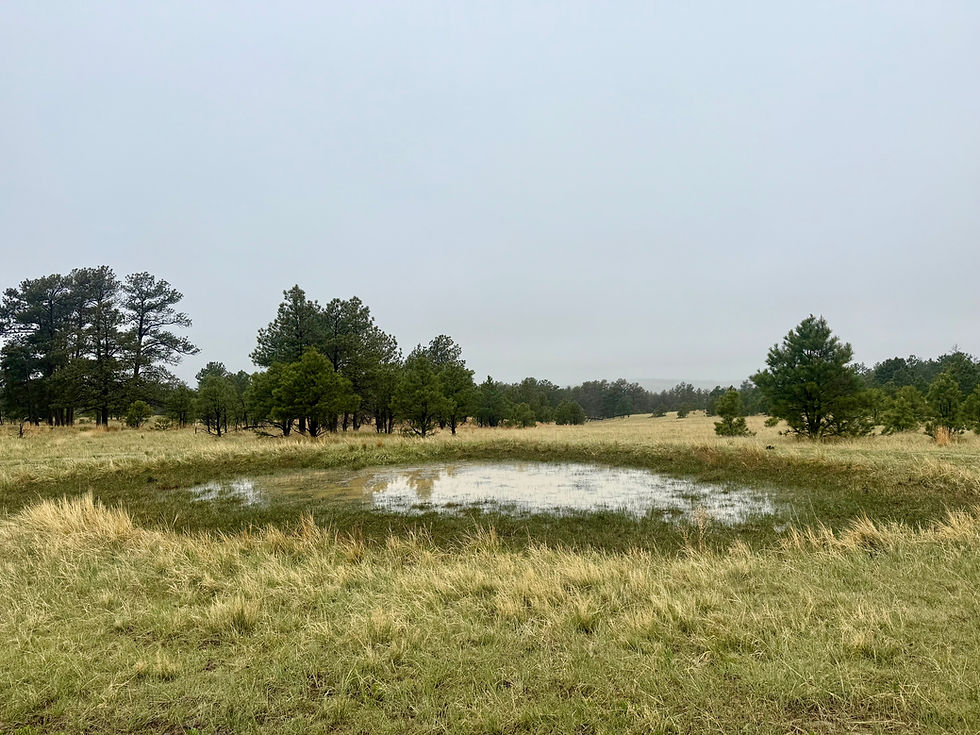
The original parcel Lost Arrow Ranch purchased was once owned by a brick company. When the brick company deemed the soil profile of the region not worth the trouble of mining clay and shale, they sold the land to a hobby cattle rancher. Years later, over a conversation of UFOs and rock hounding, the rancher agreed to sell it to us. At that point buffalo had not roamed the parcel for at least 150 years, back when the buffalo population had dwindled to near-extinction.
After Lost Arrow purchased the land, we discovered a circle formation filled with water and covered in bright green sedges like a miniature wetland located on the peak of a high ridge that stretches across the region. I assumed the formation was a spring created from a high water table trapped by bedrock. But the circle sat high on the ridge and the unnaturally-shaped depression in the soil made that hypothesis unlikely. Consulting with other buffalo ranchers confirmed my suspicion. The formation was a large, old buffalo wallow. (Our pasture is now dotted with a few smaller ones from our herd.)
These depressions, or wallows, are made when buffalo roll in the dirt. It's a great way for the animals to keep cool, scratch an itch, rub off old winter undercoats, and keep the flies at bay. Usually a bull comes first, then the cows and calves, all taking turns dust bathing.

What's amazing about these formations is the size they can reach and the mini-ecosystems they eventually evolve into. The compacted dirt holds water about as well as our tank, giving life to insects, amphibians, and birds. All are dependent on the buffalo's creation.

Wallows still dot the United States, hundreds of years later, providing a habitat for diverse plants and animals. Another example of how this keystone species play an important roll in the balance of our prairie.


Comments